Chapter 4: The Clean Slate
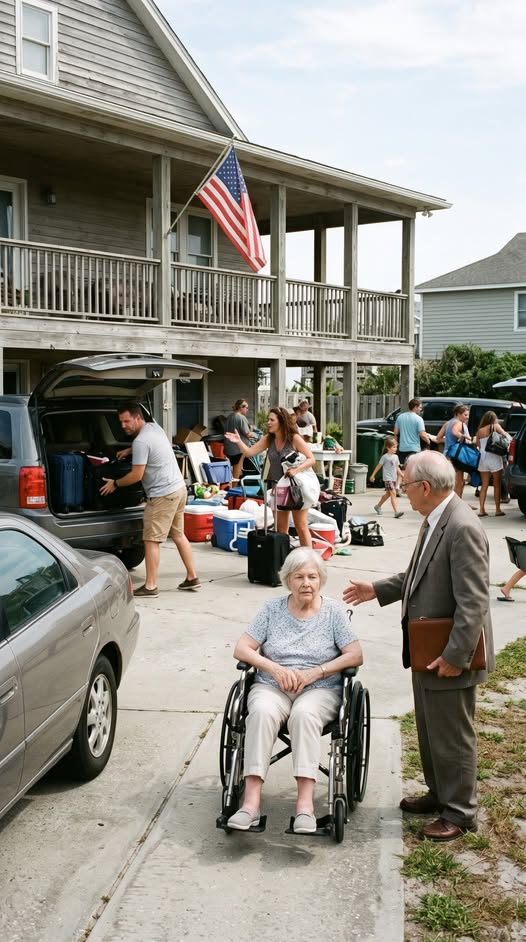
The red taillights of the town car and the federal escort cruisers disappeared around the southern curve of South Fletcher Avenue, leaving behind a silence so absolute that the rhythmic sigh of the ocean filled the void like a returning tide.
The crushed shells on the driveway were scattered and scuffed, bearing the deep, violent gouges left by Donald Hayes’s tires, but the house itself stood untouched.
Arthur Vance remained on the porch, leaning against the cedar railing, his fountain pen tucked safely back into his breast pocket. He drew a deep breath of the damp night air, his face reflecting the bone-deep exhaustion of a man who had spent fourteen straight hours in legal combat.
""The federal filing will hold indefinitely, Eleanor,"" Arthur said softly, watching the faint blue emergency strobes of the Coast Guard cutter patrolling two miles offshore. ""Donald Hayes will spend the next three years trying to keep his name off an indictment. His partners in Atlanta will force him to resign from his senior equity stake by nine o'clock tomorrow morning to preserve the firm’s public reputation.""
""And Robert?"" I asked, looking down at the empty wooden step where my son had sat weeping ten minutes earlier.
Arthur’s expression softened into something heavy and somber. ""Robert has a bachelor's degree in economics, twenty-four thousand dollars in credit card debt, and a resume that lists five years of running a marketing consultancy funded entirely by his father’s patent trust. He will have to find an entry-level analyst position in Charlotte or Richmond. He will rent a one-bedroom apartment with laminate counters, drive a ten-year-old sedan, and learn what an honest sixty-hour work week actually feels like.""
I nodded slowly, resting my hands in my lap.
There was no joy in my victory. No triumphant surge of pride.
A mother does not celebrate cutting off her own limb, even when that limb has turned to gangrene. But as I looked at the dark silhouette of the live oaks framing the Atlantic, I felt the final, lingering ache of guilt evaporate from my chest. I had not ruined Robert. Robert had hollowed himself out, trading the iron character his father had tried to instill for the cheap, glittering vanity of Donald Hayes's world.
""Come inside, Arthur,"" I said, turning my wheelchair toward the open double doors. ""The tea is cold, but Henry kept a bottle of twenty-year-old scotch behind the study bookcase for moments when the lawyers finished their work.""
Arthur chuckled—a warm, genuine sound that chased the cold shadows from the porch. ""Now that, Eleanor, is the most sensible instruction you’ve given all day.""
Inside, the house felt cavernous and clean.
The specialized cleaning crew had worked miracles during their afternoon sweep. The floors had been scrubbed with citrus and cedar oil, the furniture returned to its exact alignment, and every trace of the previous night’s drunken gathering removed. On the dining room table, where Megan had left remodeling brochures and paint swatches, sat a simple crystal vase filled with fresh yellow tea roses from my garden.
Arthur poured two fingers of amber liquid into a lowball glass and set it on the side table beside my wingback chair.
""What will you do now, Eleanor?"" Arthur asked, leaning back against the leather sofa. ""You cannot stay here entirely alone in this wheelchair. The house is expansive, and while the trust provides limitless home healthcare allocations, living on this barrier island requires a physical presence.""
I took a slow sip of the scotch, feeling the smooth, smoky peat burn away the chill in my throat.
""I won't be alone, Arthur,"" I said, a faint smile touching the corner of my lips.
Arthur raised an eyebrow. ""Oh? Did you hire a private agency?""
""Not an agency,"" I replied, reaching into my purse and pulling out a handwritten letter that had arrived in my Savannah mailbox two weeks before my trip.
The stationery was simple, bearing the return address of a small community hospice clinic in western North Carolina:
*Dear Mrs. Carter,*
*I don't know if you remember me. My name is Clara Mitchell. My mother, Sarah, worked alongside you at the Savannah Garment Mill for fifteen years before she passed. You paid for my nursing school textbooks when I was nineteen, and you sent my mother flowers every single week while she was in palliative care.*
*I recently completed my certification as an advanced geriatric palliative specialist. If you ever need someone to manage your household, handle your physical therapy, or simply make a proper pot of jasmine tea on the porch, my hands are ready. You gave my mother her dignity when she had nothing left. I would consider it the greatest honor of my career to give that dignity back to you.*
Arthur read the letter, adjusting his glasses, a slow, gentle warmth spreading across his weathered features.
""Sarah Mitchell,"" Arthur murmured, looking up. ""I remember her. She was the only person in Chatham County who stood with Henry when the union went on strike in nineteen-seventy-eight.""
""Loyalty is not inherited through blood, Arthur,"" I said, folding the letter neatly and pressing it against my heart. ""It is earned through sacrifice, remembered in dark rooms, and returned when the storm hits the coast. Clara arrives on Friday.""
We sat in the quiet study for another hour, listening to the grandfather clock in the foyer chime eleven, then twelve.
At twelve-thirty, Arthur bade me goodnight, locking the heavy brass deadbolt behind him as he departed for his hotel in Fernandina Beach.
I wheeled myself through the quiet hallway toward the master bedroom.
The room was vast, with floor-to-ceiling windows looking out over the Atlantic. The moonlight poured across the handmade patchwork quilt I had spent six months stitching during the winter of nineteen-ninety-one.
I wheeled myself to the edge of the terrace doors, unlocked the safety latch, and pushed them open.
The night air was cool, sweet with the scent of night-blooming jasmine and ocean salt.
I looked down at the small bedside table beside the lamp. Sitting there, in an ornate silver frame, was a photograph of Henry taken thirty years ago on the deck of our first small fishing boat. He was smiling, his face tanned and creased by the sun, his hair windblown, his gray eyes shining with that unshakeable, quiet confidence that had carried me through half a century.
I reached out, my fingers tracing the cold glass over his cheek.
""We held the line, Henry,"" I whispered into the quiet room. ""The house is still standing.""
As if in answer, a gentle gust of wind drifted off the water, rustling the linen curtains, carrying with it that familiar, unmistakable scent of crushed cedar and ocean mist.
I closed my eyes, took a deep, clean breath, and prepared to sleep beneath my own roof.
Then, from the darkness of the lower hallway, the emergency landline phone began to ring.
---
Related Stories