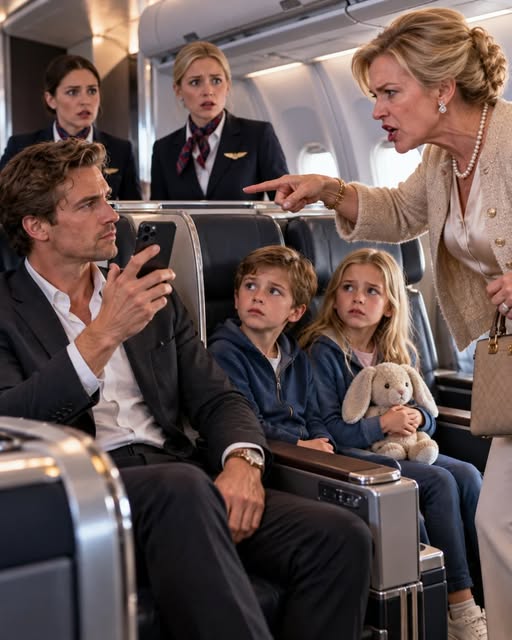
Chapter 3: The Broken Bench

The drive north was suffocating.
Rain had moved in off Lake Michigan, drumming against the windshield of Jonah’s Ford F-250 in relentless sheets. The rhythmic slap of the wipers filled the cab, doing little to cut through the heavy silence between us. Jonah kept both hands at ten and two, his knuckles white against the dark leather of the steering wheel.
Every few miles, his eyes would dart to the console where his phone rested face down.
“Your brother looked tired yesterday,” I said quietly, staring out the passenger window at the gray pine trees blurring past.
Jonah’s shoulders hitched. “Luke’s always tired. He works weird shifts.”
“What kind of shifts?”
“Warehouse. Night freight.” He cleared his throat. “He’s doing fine, Claire.”
“He didn't look fine. He looked like he was about to fall through the floorboards during the toasts. He didn't even say goodbye before we left the reception.”
“He had to get on the road back to Omaha,” Jonah said, his tone flat, signaling an end to the conversation. It was the same wall he put up whenever anyone brought up his high school years, the same polite brick facade he used on relatives who prodded too deeply.
Except now I knew about the forty-two thousand dollars. I knew about the rehab facility. And I knew someone had sent a text warning him about his father.
“Jonah,” I said, turning fully in my seat to face him. “Pull over.”
He glanced at me, surprised. “What? Here? We’re only forty minutes from the cabin.”
“Pull over at the next rest stop. Now.”
He saw the look in my eyes and didn't argue. He signaled, easing the heavy truck off the highway and into a deserted rest area surrounded by drenched hemlocks. He put the vehicle in park, cut the engine, and turned toward me with an expression of guarded exhaustion.
“What’s going on?” he asked.
I reached into my purse, pulled out the folded credit union slip, and smoothed it flat across the center console between us.
Jonah stared down at the paper. For several seconds, the only sound was the rain hammering the roof of the cab. He didn't look shocked or outraged. He just looked profoundly, impossibly tired.
“You looked in my pocket,” he whispered.
“It fell on the floor when you picked up the bags,” I corrected, my voice steady despite the tremor in my chest. “Why is our house down payment sitting in the bank account of an addiction treatment center in Minnesota?”
Jonah closed his eyes. His jaw worked as if he were chewing on glass. “Luke was in bad shape, Claire. If I didn't wire the intake balance by Friday, they were going to discharge him to the street. He has nowhere to go.”
“And you didn't tell me?” The hurt sliced through me, hot and sharp. “We signed the mortgage paperwork together. We picked out the paint for the kitchen three weeks ago! You gave away every cent we built together, Jonah!”
“It wasn't your money,” he snapped, then immediately flinched, the words hanging toxic in the air between us.
I drew back as if he had struck me.
“Claire, no. That’s not what I meant—”
“Is that who sent the text this morning?” I demanded, pressing the advantage while his guard was down. “The treatment center?”
Jonah’s head snapped up. “What text?”
“*‘Check your account. She cashed the draft this morning. She thinks you’re still keeping the deal.’*” I recited the words from memory, cold and clear. “Who is she, Jonah? And what deal?”
The color drained from his face entirely, leaving him an ash-gray that made his dark eyes look hollow. “You read my messages.”
“I saw the lock screen while you were brushing your teeth! And then I saw the warning about your father paying Luke off! What happened in that basement ten years ago, Jonah? Tell me the truth. Right now.”
Jonah leaned forward, pressing both palms against his face, his broad shoulders curling inward as if he were trying to fold himself into a smaller container. When he finally lowered his hands, there were tears trapped in the corners of his eyes.
“It wasn't a fight, Claire,” he whispered, his voice cracked and raw. “I didn't push Luke into the workbench.”
I stared at him, my heart stalling. “What are you talking about? You told me—”
“I lied. I’ve been lying since I was fifteen.” Jonah looked out the passenger window into the rain. “Luke wasn't jumping on my back. My father came home from the plant drunk, like he did every second Friday. He started screaming at Luke about his grades, backed him into the corner by the water heater, and grabbed the iron pipe from the plumbing rack.”
A chill swept down my spine, icy and suffocating.
“I was fifteen,” Jonah said, his voice dropping to a harsh monotone. “I was already six-four. I tackled my father. I threw him against the furnace so hard the vent popped loose. But my father didn't stay down. He swung the pipe, missed me, and threw a full-sized steel vice across the room. It hit Luke in the ribs.”
I covered my mouth with a hand, the horror rising in my throat. “Your dad did that?”
“My father broke his ribs. My father collapsed his lung.” Jonah turned to me, his gaze blazing with old, unhealed fury. “And when the paramedics arrived, my mother pulled me into the pantry and told me that if the police arrested my father, we’d lose the house, the pension, and the insurance to pay for Luke’s surgery. She told the sheriff I had thrown Luke during an argument. She told them I had a temper.”
He tapped his chest with a single, heavy finger.
“My father made the deal: he would pay for Luke’s medical bills and keep quiet about me being ‘violent’—on the condition that I gave up football, stayed home to work the scrap yard, and never contradicted their story. And Luke? When Luke woke up in the hospital, they convinced him I was the one who did it.”
---
Related Stories