Chapter 3: The Safe House and the Box
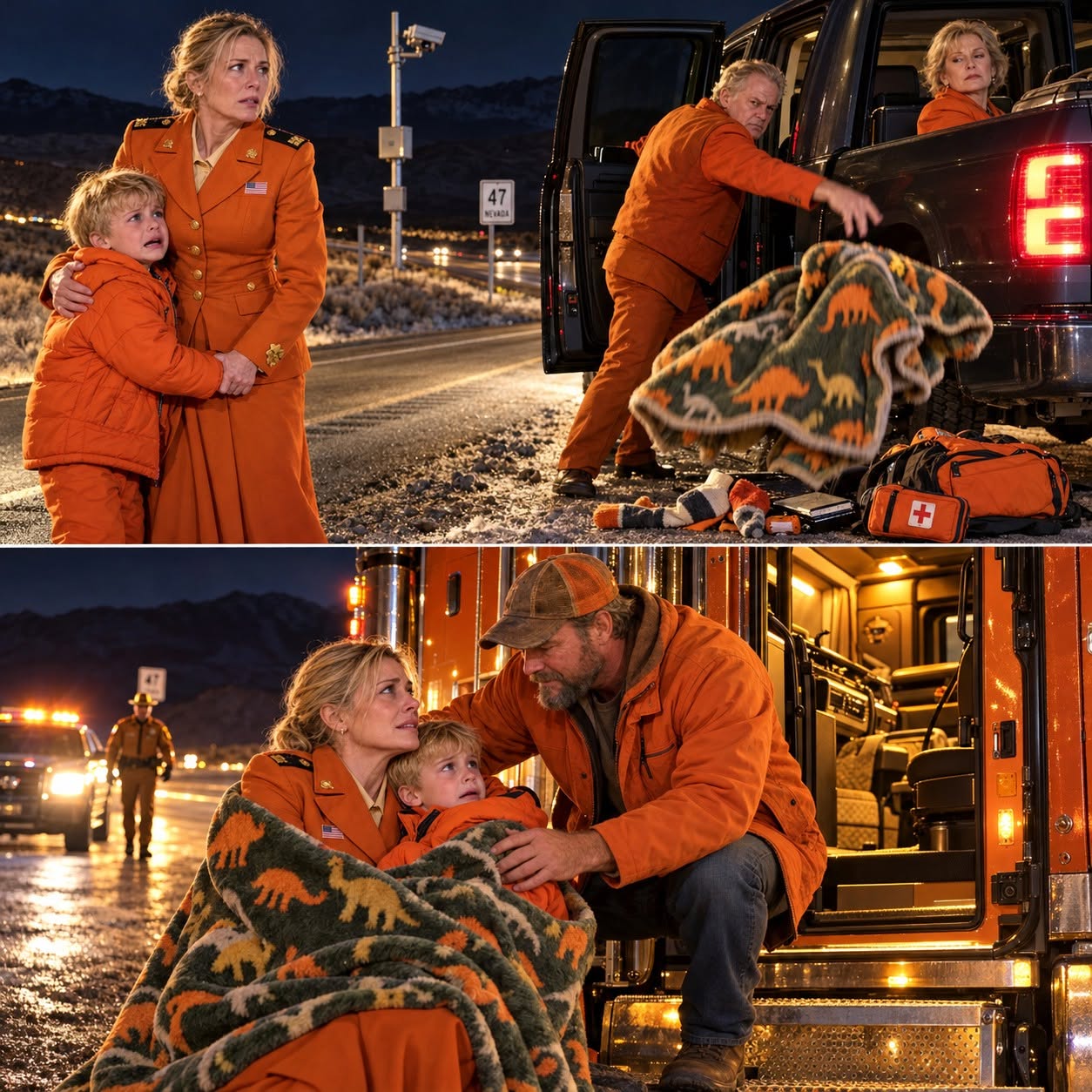
We spent the remainder of the night at a quiet family services facility in Fallon, where a county nurse checked Ellis over and confirmed that his concussion was mild, though the swelling on his forehead would take a few days to subside.
By mid-morning, the adrenaline that had sustained me through the freezing dark began to recede, leaving behind a profound, bone-deep exhaustion. Ellis had finally fallen into a deep, dreamless sleep on a narrow cot in the corner of the intake room, wrapped in three scratchy wool blankets supplied by the station.
The door clicked open, and Trooper Bennett walked in carrying a cardboard box sealed with evidence tape.
""Your personal effects,"" Bennett said, setting the box down on the metal table. ""The contents of your wallet were inventoried, your keys are intact, and your phone has been charged using our departmental port. You've missed about forty text messages from your mother's defense attorney.""
I traced my fingers over the familiar leather surface of my wallet. ""Did they make bail?""
""Released on own recognizance pending an arraignment next Tuesday,"" Bennett sighed, pulling out a chair and sitting down. ""District attorney's office is moving fast on the custodial interference and endangerment charges. But Captain... there's something else in that box you should see before you look at your phone.""
I looked up, meeting his steady gaze. ""What is it?""
Bennett reached into his jacket pocket and produced a small, slightly crumpled Manila envelope that hadn't been listed on the initial inventory. ""One of the troopers searching your parents' truck found this tucked inside the lining of the glove compartment, right behind your mother's registration papers.""
I took the envelope. It was unsealed. Inside was a stack of faded, handwritten receipts and a single legal document dated nearly twenty years ago—long before I had enlisted in the Army, back when I was a teenager living under their roof.
I pulled the document out and unfolded it.
It was a medical debt settlement agreement from a regional hospital in Carson City, detailing emergency treatments administered after a severe car accident I had survived at age sixteen. The total bill had been over forty thousand dollars. But what caught my eye wasn't the medical total; it was the series of assignment-of-funds signatures at the bottom.
My father’s signature was there. But beside it, stamped in bold red ink by a debt collection agency, was a notation indicating that the debt had been satisfied through a secondary property lien executed against a trust fund established by my maternal grandfather—a trust fund that my mother had repeatedly told me was completely depleted by legal fees during my parents' bitter divorce settlement years prior.
""Read the addendum on the back page,"" Bennett murmured.
I turned the paper over. There, written in my mother’s cramped, precise handwriting, was a ledger of expenses spanning my entire childhood, college years, and early military service—a running balance sheet where every meal, every textbook, and every medical expense was tallied against my future earnings, culminating in a final calculated figure that matched almost precisely the equity in the apartment I had recently rented in Carson City.
The cold realization hit me with the force of a physical blow.
My parents hadn't just ambushed me on Route 47 because of temporary custody or old age anxieties. To them, I wasn't a daughter or a mother; I was an ongoing financial ledger that had attempted to balance its own books.
---
Related Stories