Chapter 8: The Chain of Custody
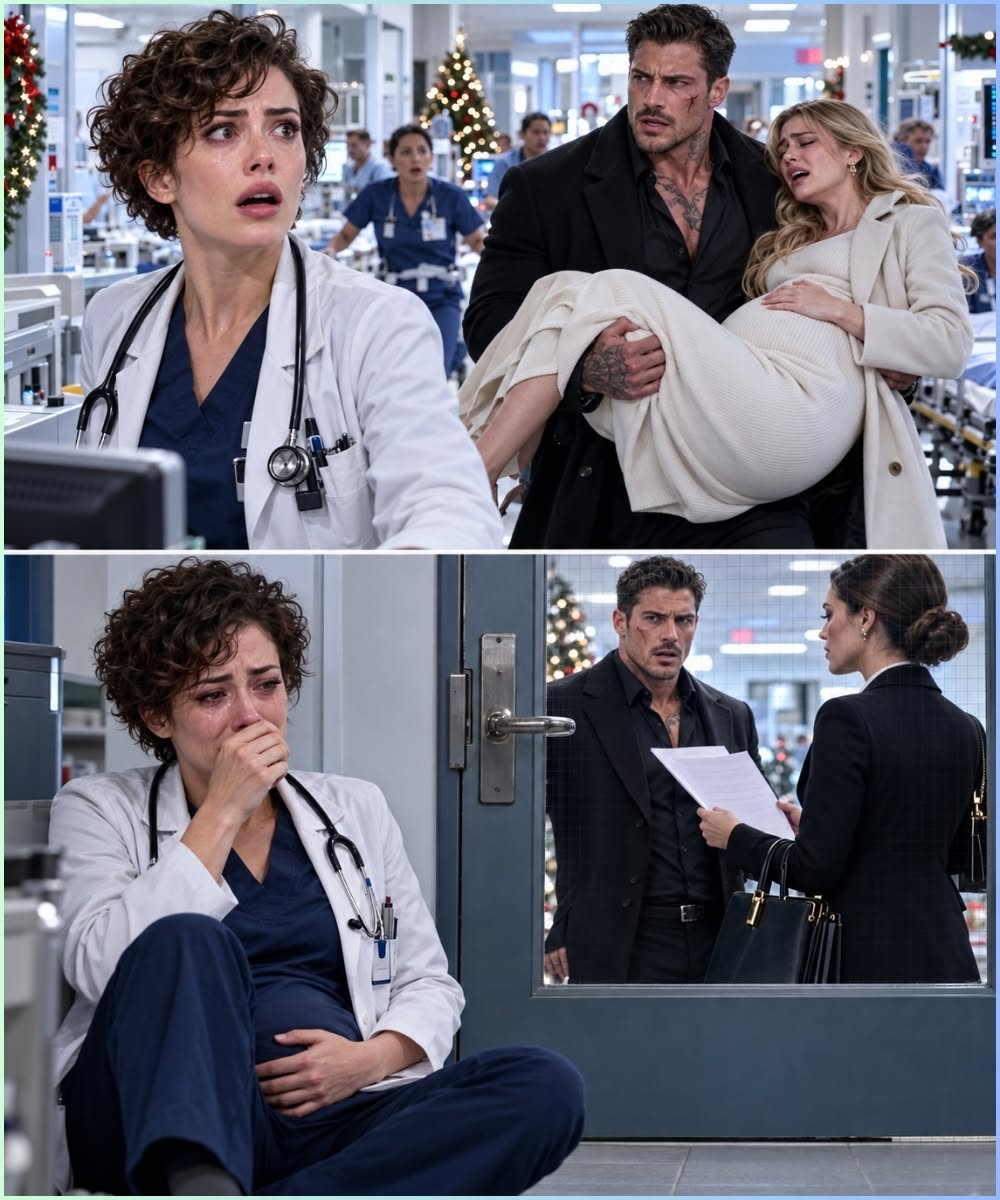

The underground executive garage beneath the Metropolitan Club smelled of damp concrete, melting rock salt, and cold exhaust.
Rebecca Collins slammed the door of her Audi sedan, leaning over the hood with her iPad while Julian stood beside a matte-black armored Suburban, checking the seal on a leather travel case.
“The warrant was signed at 7:55 AM,” Rebecca said, her thumbs flying across the screen. “Harrison pushed it through the municipal docket under an expedited emergency criminal complaint. They’re alleging grand larceny of Schedule II narcotics and felony tampering with a medical patient. Every port authority officer at JFK and Newark has your photograph on their terminal right now, Claire.”
I stood between the two vehicles, still wearing my oversized transport parka, my hands thrust into the pockets.
“I didn't steal anything,” I said, my voice cold, the fury burning away the last remnants of fear. “Every milligram of medication administered to Vanessa was logged under my attending physician credentials at St. Catherine’s. The pharmacy dispensing log requires a dual-biometric thumbprint scan.”
“It doesn't matter what the truth is, Dr. Moretti,” Rebecca replied, looking up with grim urgency. “The warrant gives the Port Authority Police the legal right to detain you for up to seventy-two hours for ‘evidentiary intake.’ If you are sitting in a holding cell at Rikers Island at 5:00 PM tomorrow, the Swiss wire releases automatically. Vincent’s lawyers don't need a conviction. They just need you locked in a room without an internet connection for thirty hours.”
“They aren't taking her,” Julian said.
He spoke without raising his voice, but the absolute, immovable certainty in his tone made Rebecca pause.
Julian walked over to where I stood, pulling a dark woolen peacoat from the back of the Suburban and draping it over my shoulders. The heavy fabric smelled of cedar and cold rain, entirely replacing the sterile hospital stench that had clung to me since midnight.
“We aren't flying commercial from JFK,” Julian said, his eyes scanning the garage exits. “My family owns an independent maritime logistics terminal in New London, Connecticut. An offshore helicopter is idling on the landing pad right now. From there, we fly directly to an international cargo hub in Bangor, Maine, where a private Gulfstream registered to my Canadian holding company is fueled for Zurich.”
“Bangor?” Rebecca frowned. “The state police have jurisdiction across the state line.”
“Not on an offshore maritime corridor operating under federal customs pre-clearance,” Julian said. He looked at me, his gaze searching my face. “Claire, can you handle six hours in an unpressurized cabin?”
“I’ve handled forty-eight-hour trauma rotations on three hours of sleep, Julian,” I replied, pulling the coat tight around my collar. “I’m not made of glass. But before we leave this city, I need the physical paper logs from St. Catherine’s.”
Rebecca shook her head. “Claire, going back to the hospital is suicide. The precinct has two squad cars stationed in the ambulance bay.”
“Listen to me,” I said, stepping between them, the clinician’s mind calculating the odds. “Vincent’s attorney based the warrant on a falsified digital report generated by the hospital’s electronic health records system. But St. Catherine’s has a redundant analog protocol for all cardiac arrests in Room 4. Dr. Evans keeps the physical carbon-copy intake sheet in his personal desk drawer in the obstetrics office.”
I pulled my hospital master lanyard from my scrub pocket, holding up the brass key with the red enamel tip.
“If we don't have that physical carbon slip signed by Dr. Evans, Vincent’s lawyers will claim the digital records were hacked by Julian’s team,” I continued. “We need the wet ink. Without it, the Swiss bank will consider the fraud allegation contested, and contested trusts are frozen in place—which means Vincent’s blind foundation retains temporary custody.”
Julian stared at me for three long seconds. A slow, quiet respect settled into his expression.
“She’s right,” Julian said, turning to Rebecca. “Without the physical chain of custody, the Swiss compliance board will stall. And stalling is a loss.”
“How do we get into the hospital without triggering the warrant?” Rebecca asked, crossing her arms against the chill.
“We don't go through the front,” I said. “The old pediatric pavilion on the north side is under renovation. The basement connects to the main trauma bay through an unmonitored utility corridor used by the steam fitters. My badge has sub-level engineering clearance.”
Julian pulled a secure flip phone from his pocket, dialing a single digit.
“Marcus,” Julian spoke into the receiver. “Bring the medical transport van to the service ramp on 68th Street. We need a secondary diversion at the main emergency entrance in ten minutes.”
He snapped the phone shut, looking down at me.
“Stay close to me, Claire,” Julian murmured, his hand settling firmly against the small of my back. “If anything goes wrong, you don't argue. You run.”
“I’m done running, Julian,” I answered, meeting his gaze without flinching. “I spent five years looking the other way while your brother smiled and lied to my face. I am taking my life back today, and I’m taking my child with me.”
Twenty minutes later, the tires of the Suburban crunched over the snow-covered gravel of the abandoned construction lot behind St. Catherine’s north wing.
The old pediatric pavilion was dark, its tall, arched windows covered in heavy plywood, yellow caution tape fluttering in the freezing wind. Snow was falling in thick, silent blankets now, muffling the distant wails of city traffic.
Julian stepped out first, his hand resting inside his coat, his eyes methodically checking the fire escapes and the rooftop line. He signaled me forward with two fingers.
I slipped out of the vehicle, the bitter wind stinging my cheeks, and led the way toward a rusty iron bulkhead set into the foundation stones.
I slid my master key into the brass padlock.
Click.
The heavy iron door groaned as I pulled it upward, revealing a dark, concrete staircase descending into the subterranean warmth of the hospital’s heating tunnels. The air smelled of old grease, asbestos, and high-pressure steam.
“Down,” Julian whispered, stepping onto the rungs behind me, his broad frame blocking the falling snow.
We moved quickly through the labyrinth of red and yellow pipes, our footsteps silent on the damp concrete. After three minutes, we reached the heavy steel fire door labeled OB/GYN CLINICAL SUITE – SERVICE ACCESS.
I pressed my master keycard to the sensor.
The green light flickered. The electronic lock disengaged with a sharp thud.
The hallway was dimly lit by emergency backup lights. It was quiet—the hush of an administrative floor on Christmas morning.
We reached Dr. Evans’s corner office. The door was unlocked.
I hurried behind his mahogany desk, pulling open the bottom file drawer, my fingers flipping through the manila folders until they hit the red plastic tab: TRAUMA CODE SHEETS – DECEMBER.
I pulled out the heavy carbon-copy pad.
There it was.
Page 412: Vanessa Reed. 04:12 AM. Cardiac arrest secondary to acute synthetic prostaglandin toxicity. Attending: Dr. Claire Moretti. Countersigned: Dr. Marcus Evans, Chief of OB/GYN.
Every milligram of medication was logged in Marcus’s unmistakable, spidery handwriting, complete with the hospital’s embossed holographic security seal.
“Got it,” I breathed, clutching the document to my chest.
“Claire.”
Julian’s voice came from the doorway—flat, motionless, and deadly quiet.
I looked up.
Standing in the hallway outside the office, flanked by two armed men in dark security uniforms, was a man in an impeccably tailored charcoal suit.
He was in his late fifties, with slicked-back silver hair, cold blue eyes behind wire-rimmed glasses, and a leather briefcase handcuffed to his left wrist.
Raymond Vance.
Vincent’s lead defense attorney.
“Dr. Moretti,” Vance said, his voice smooth as chilled marble as he stepped across the threshold. “You really should have taken the flight to Florida. It would have saved us all an immense amount of administrative unpleasantness.”
Related Stories