Chapter 2: The Name on the River
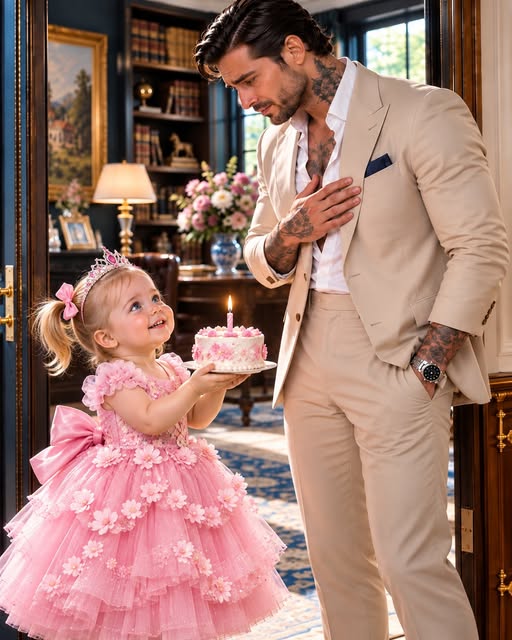
The ballroom smelled of money, expensive cologne, and hypocrisy.
When I reached the bottom of the twin marble staircase, the applause rippled through the two hundred guests like a sudden gust of wind. Men with silver hair and tailored silk lapels turned toward me, raising crystal flutes of vintage Dom Pérignon.
""There he is!"" Anthony Russo bellowed, stepping forward with his heavy gold signet ring catching the chandelier light. He clapped a hand onto my shoulder—a little too firmly, a little too familiar, testing the boundaries of our thirty-year partnership as he always did when politicians were watching. ""The man who keeps Chicago’s trains running on time! Happy birthday, Gabriel.""
""Anthony,"" I said, my voice cutting through his warmth like an iron blade.
I didn't smile. I didn't raise the glass a waiter offered on a silver tray.
My eyes swept the room. Senator Hastings stood near the ice sculpture, talking to two appellate court judges. Across the parquet floor, my security chief, Marco, stood against the fluted columns, his fingers linked over his belt, watching the exits with the quiet vigilance I paid him half a million a year to maintain.
Everything looked normal. Everything looked like the empire I had built with my bare hands over thirty years of blood and municipal contracts.
Yet all I could see was a three-year-old girl in a yellow sweater and a blue box hidden in a servant's room.
""You look like you're attending a funeral, Gabriel,"" Russo murmured, leaning in close, his breath carrying the sharp tang of bourbon. ""Loosen up. Hastings agreed to fast-track the Lake Calumet harbor dredging permits. By next spring, our barges won't have to clear the federal customs checkpoint at the lock.""
""The Calumet permits,"" I repeated.
""Signed this afternoon,"" Russo said, grinning, his chest swelling beneath his velvet waistcoat. ""A birthday present from the firm. We own the southern channel now. Nobody looks in our containers.""
The river. Always the river.
Eight years ago, Julian’s car had plunged off the 106th Street Bridge into that exact channel. The police report said he was driving seventy miles an hour in dense fog, his blood alcohol level twice the legal limit. Russo had been the one who identified the vehicle. Russo had been the one who handled the divers, comforted our mother before she passed, and told me to let it go.
*“He was reckless, Gabriel,”* Russo had told me eight years ago on this very lawn. *“He couldn't handle the life. He broke under the pressure.”*
""Did you ever meet Julian's friends from the community center in Oak Park, Anthony?"" I asked quietly, looking past him at the crowd.
Russo’s glass paused half an inch from his mouth.
The jovial, ruddy warmth in his face didn't drop, but his eyes narrowed fractionally—a slight, predatory recalibration that only a man who had survived forty years in the syndicates would recognize.
""Oak Park?"" Russo chuckled, taking a sip. ""Julian didn't have friends in Oak Park. He had card games in Cicero and racing debts in Gary. Why are you bringing up dead boys on your birthday?""
""Just thinking about old debts,"" I replied.
""Leave the dead in the mud, Gabriel,"" Russo said, his voice dropping into a harsh, conspiratorial whisper. ""We have living people to manage. Come talk to Hastings before his detail pulls his car around.""
I spent thirty-five minutes working the room.
I shook seventeen hands. I promised two campaign donations. I accepted a gold cigar cutter from a teamsters' local president. Every gesture was mechanical, hollow, practiced over three decades of public survival.
At 10:25, while Russo was laughing with the senator on the front portico, I slipped through the service door behind the orchestra.
The covered stone breezeway between the main manor and the carriage house was cold, smelling of wet autumn grass and lake fog.
The carriage house had four private apartments on the upper floor, originally built for chauffeurs and groundskeepers. Claire Morgan’s unit was at the far end, beneath an old slate gable.
I didn't knock. I used the brass master key from my pocket.
The deadbolt turned with a clean, well-oiled click.
The small living room was immaculate, smelling of lavender detergent and warm vanilla. There was a worn sofa covered in a floral knit blanket, a wooden shelf filled with second-hand children's books, and a plastic tea set arranged neatly on a braided rug.
Sitting at the small laminate kitchen table under a single amber hanging light was Claire Morgan.
She hadn't run.
She sat with her hands folded tightly in her lap, her uniform apron removed, wearing an old gray wool cardigan buttoned to the throat. Beside her elbows, placed squarely in the center of the clean tabletop, was a battered cardboard box wrapped in faded blue satin paper, tied with a frayed grosgrain ribbon.
Mia was asleep in the adjoining bedroom, the door cracked open enough for me to hear her soft, rhythmic breathing.
Claire looked up as I closed the front door behind me. Her eyes were red-rimmed, but the frantic, hysterical terror from my study had solidified into something cold, steady, and resigned.
""You're early,"" she said softly.
""I don't like keeping appointments with shadows, Claire,"" I said, walking to the table.
I pulled out the opposite wooden chair and sat down. My heavy wool coat creaked as I leaned forward, resting my forearms on the edge of the table.
""Open it,"" I commanded.
Claire didn't flinch. Her hands were cold and dry as she untied the blue ribbon. She lifted the cardboard lid and set it beside the box.
Inside sat three items.
A silver whistle attached to a faded green lanyard.
A stack of thirty handwritten letters tied together with an elastic band, the postmarks dated from eight years ago.
And a framed color photograph: Julian, smiling under an afternoon sun, wearing a navy coaching windbreaker, his arm wrapped around a nineteen-year-old girl with long chestnut hair and bright, unburdened eyes.
Claire.
My lungs emptied.
The room seemed to shrink until the walls were pressing against my temples.
""Julian,"" I whispered, the name tasting like ash and iron on my tongue. ""You were with Julian.""
""We were getting married,"" Claire said, her voice completely devoid of tears, carrying the hollow, ancient weight of a grief that had been carried alone for nearly a decade. ""The ceremony was scheduled for October twelfth. In a small chapel in Wisconsin. He had already signed the lease on a house outside Milwaukee.""
She reached into the box and touched the bundle of letters with the tip of one finger.
""He told me his family was complicated,"" Claire continued, looking up into my face, searching my eyes with a brutal, piercing scrutiny. ""He said his older brother was a powerful man who protected people, but lived in a world where secrets were dangerous. He was terrified of you, Mr. Valenti. But he loved you. He told me that when you found out he was leaving the business, you would either understand... or you would have to choose between him and your empire.""
My hands curled into fists on the laminate. ""I never knew. He never told me about a woman. He never told me about Milwaukee.""
""He didn't get the chance,"" Claire said, a single tear finally spilling over her dark lashes, tracing a slow line down her cheek. ""Because forty-eight hours before we were supposed to leave, someone cut his steering column and pushed his car into the Calumet.""
The hair on my neck stood straight up.
""The police report said he was drunk,"" I rasped, the lie crumbling in my hands after eight years of absolute certainty. ""They found three empty bottles in the floorboard.""
""Julian never drank,"" Claire said, her voice rising in a sharp, furious whisper that cut right through my ribs. ""His father died of cirrhosis when he was twelve! He hated the smell of liquor! Those bottles were planted, Mr. Valenti! Just like the forged promissory notes Anthony Russo delivered to the probate court three weeks later!""
The air left my chest in a concussive shock.
""Anthony?""
""Julian didn't owe gambling debts,"" Claire whispered, leaning across the table until I could see the reflection of the amber bulb in her pupils. ""Julian found out that Russo was using the youth community center’s tax-exempt accounts to launder federal payoffs for the river dredging project. Julian confronted him the night before he died. And Russo told him that if he went to you, you would kill him yourself to protect the firm.""
I sat in the silence of that small kitchen, listening to the clock on the stove tick toward midnight.
Eight years.
Eight years of sitting in my dark study, blaming myself for driving my brother into the bottle, believing he had died a weak, ruined boy who couldn't bear the weight of our father's legacy.
And the entire time, the man who had ordered his execution had been sitting at my right hand, drinking my Scotch, laughing under my chandeliers.
""Why did you come here, Claire?"" I asked, my voice shaking with a terrifying, subterranean rage. ""If you believed I was responsible... why did you take a job in my house?""
Claire looked toward the cracked bedroom door where Mia lay sleeping.
""Because six months ago, my husband—the man who took me in after Julian died, who gave Mia his name—died of leukemia,"" Claire said softly. ""The hospital bills took every penny. The bank foreclosed on our apartment in Elgin. We were living out of my car in a parking lot off Interstate 90.""
She turned her eyes back to mine, and the truth in them hit me harder than any bullet I had ever taken.
""I didn't come here to kill you, Mr. Valenti,"" Claire said. ""I came here because I knew this was the only house in Illinois where Anthony Russo’s men would never dare to look.""
---
Related Stories