Chapter 6: The Ghost in the Sub-Layer
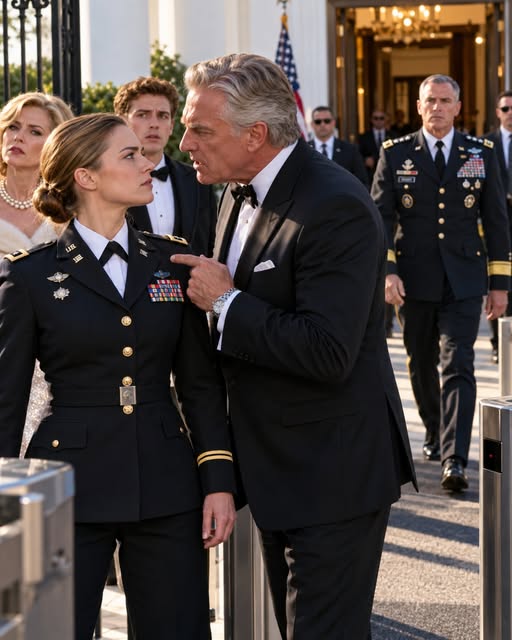
The morning briefing at the Pentagon was supposed to be a victory lap. I sat at the head of the conference table, watching the digital projections of the new secure network architecture fill the room. The transition from the compromised Mercer-tech hardware to our new quantum-encrypted relay system was ninety percent complete. It was a clean, efficient, military-grade success.
Then, the data stream flickered.
It wasn't a glitch in the projector. It was a spike in the raw telemetry coming in from the Gobi relay station. A sudden, unexplained jump in bandwidth usage—a ghost signal siphoning energy from the backbone.
General Vance leaned in, his eyes narrowing. ""Kate, why is the Gobi node pinging the satellite in deep-space standby mode? That station is supposed to be air-gapped.""
I stood up, moving to the main console. My fingers flew across the haptic interface, tracing the unauthorized connection. It wasn't coming from outside the network; it was coming from within the hardware itself—a nested protocol embedded so deep in the sub-layer of the main frame that it hadn't even triggered the standard forensic sweep.
""It’s a legacy trigger,"" I muttered, my pulse quickening. ""Whoever built the original architecture, they didn't just put in a backdoor. They put in a recursive loop. It’s waiting for a specific activation command.""
""From who?"" Vance asked, his voice low. ""The entire board of Mercer Tech is behind bars. The servers are in federal evidence lockers.""
I pulled up the deep-architecture schematic. The recursive loop wasn't just a backdoor; it was a beacon. It was broadcasting a low-frequency pulse, barely audible on the spectrum, aimed at a localized receiver somewhere in the Pacific theater.
""It’s not from Arthur,"" I said, realizing the implications as the blood drained from my face. ""This isn't a Mercer-tech artifact. It’s an original hardware signature. Look at the coding logic. This is pre-privatization. This is the hardware signature of the Defense Advanced Research Projects Agency—the experimental units from the late nineties.""
The room went deathly silent. DARPA hardware from twenty-five years ago shouldn't exist in the current grid. It was decommissioned long before I even pinned on my second lieutenant’s bars.
""General,"" my aide, a young major named Halloway, called out from the side desk. ""Sir, I’m getting an emergency intercept from the Pacific Command. A submarine detection array in the Mariana Trench just went offline. And it’s reporting the exact same ping signature we’re seeing here.""
I looked at Vance. The triumph of the last few weeks evaporated, replaced by the cold, familiar sensation of a trap being sprung. This wasn't a leftover mistake from my father’s greed. This was something much older, and much more dangerous.
""Halloway, pull the archived project files for 'Project Aether,'"" I commanded.
""Ma'am, that's classified above my clearance level,"" the major stammered.
I stepped to the console, inputting my authorization code—a high-level override I hadn't used since the promotion ceremony. The screen flushed red, then blinked into a series of decaying text files.
*Project Aether: Status – Ongoing. Lead Architect: Dr. Elias Mercer.*
My grandfather. A man who had died in a laboratory accident a year before I was born. A man whose name Arthur had never spoken, preferring to bury his legacy under the flash and profit of his own commercial ventures.
""Marcus,"" I said, my voice barely a whisper. ""My grandfather didn't die in an accident. He was the one who built the foundation my father sold off. And someone is finally turning it back on.""
A heavy pounding at the briefing room door echoed through the quiet chamber. The security detail outside didn't bark their usual arrival protocols. Instead, they signaled a Code Black—the rarest, most extreme threat level in the building.
""We’re being quarantined,"" Vance noted, looking at the door, his hand resting on the holster of his sidearm. ""Kate, if your grandfather’s project is coming back online, what is it designed to do?""
I looked at the terminal. The code wasn't a communications relay. It was a grid-wipe protocol. A master key designed to shut down every piece of technology connected to the national defense network simultaneously.
""It’s not a weapon for war,"" I whispered, watching the progress bar on the screen jump from two percent to ten. ""It’s a kill switch. And it’s already started.""
Related Stories