Chapter 1: The Sky That Turned to Iron
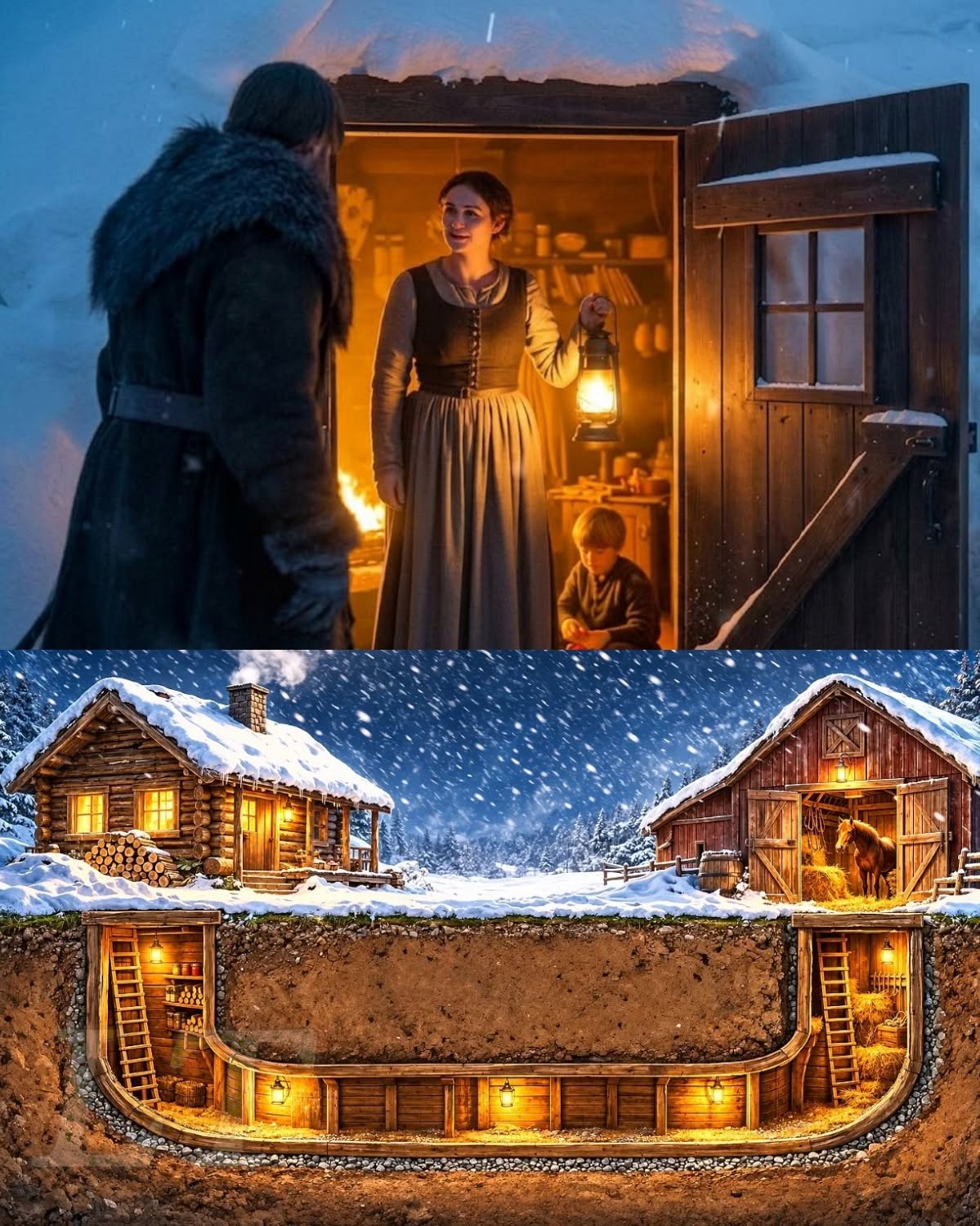
The barometer on Anya’s kitchen wall did not merely drop; the mercury collapsed as if struck by an invisible hammer.
It was mid-November, barely three weeks after she had laid the final sod blocks across the roof of the trench. Outside, the morning had begun deceptively tranquil. A thin, glassy sun hung over the sapphire peaks of the Sapphire Mountains, casting long, pale shadows across the valley floor. But by two in the afternoon, the sky had curbed its blue and hardened into a bruised, leaden slate. The air smelled of ozone, crushed pine, and that ancient, metallic dryness that only the northern arctic front could carry.
""Eric,"" Anya called, her voice slicing through the stillness of the cabin. She did not yell, but the edge in her tone brought her six-year-old son upright from his spot by the hearth, where he had been whittling pine shavings with a dull butter knife. ""Boots on. The heavy ones. Then go to the woodbox and stack until your arms ache.""
""Is the wind coming, Mother?"" Eric asked, his gray eyes widening as he looked toward the small glass panes of the south-facing window.
""The wind is already here, sweetheart. It’s just holding its breath.""
Anya threw an oiled canvas duster over her wool coat, picked up two five-gallon galvanized buckets, and stepped onto the porch. The world was utterly devoid of sound. No birds called from the scrub brush; even the chickadees that usually flitted through the dry cottonwoods had vanished into deep cavities of rock and timber. Across the two-mile flat toward the Croft ranch, she could see a faint white haze rising along the lip of the ridge. It was not a cloud. It was a ground drift, thrown ten feet into the air by an approaching wall of gale-force pressure.
Silas Croft’s timber mansion, flanked by two towering red hay barns and a paddock filled with sixty prized Hereford steers, stood in stark relief against the whitening horizon. Even from this distance, she could see three riders frantically driving the cattle toward the lower pens, their whips cracking like distant rifle fire against the stillness.
Silas had sixty cows to feed and four hired hands to keep him warm. She had one cow, two goats, half a dozen hens, and an old miner’s journal.
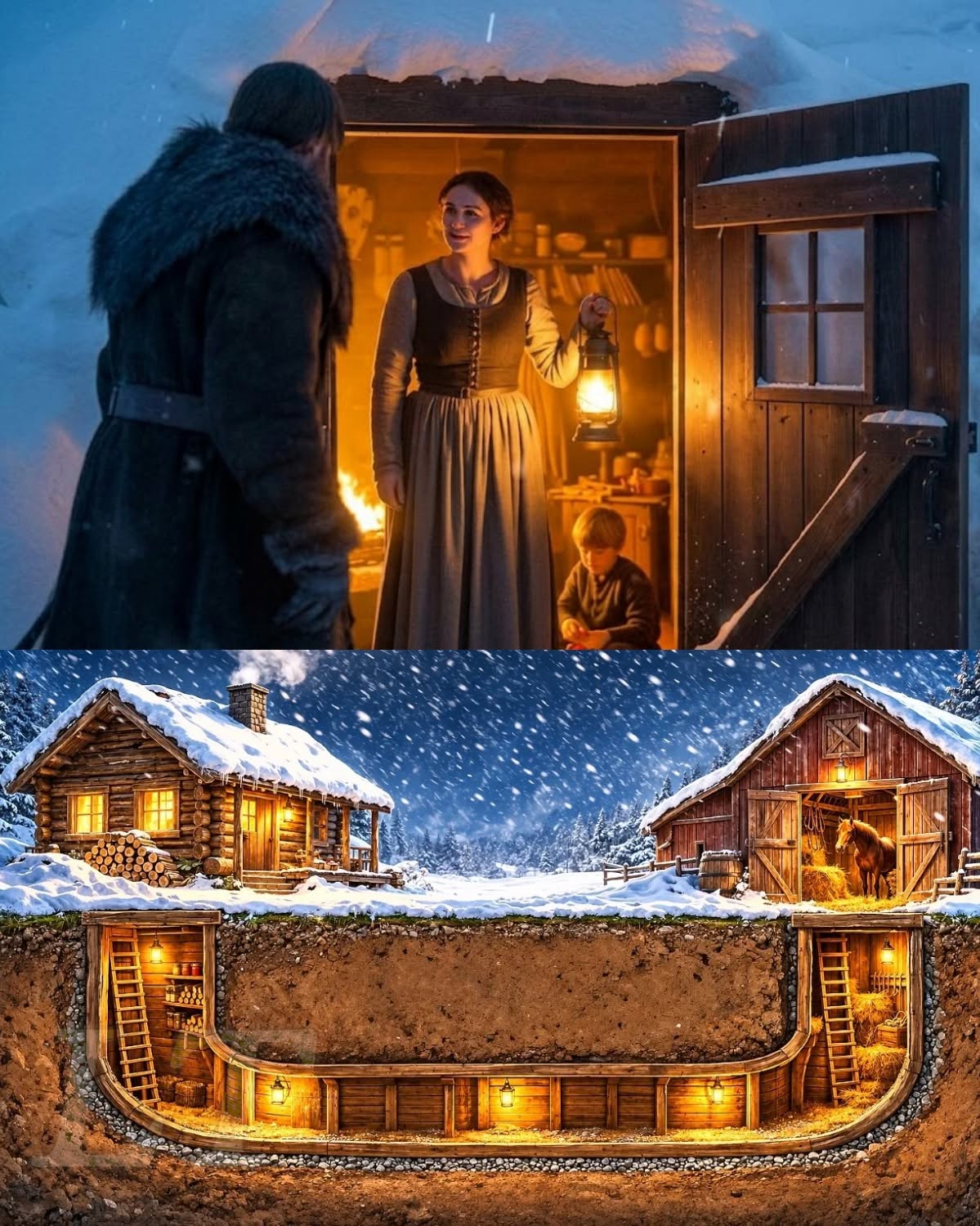
Anya turned toward her own yard. The long mound that ran from the corner of her cabin to the side entrance of the barn looked like nothing more than an ancient, slumbering serpent blanketed in dying prairie clover. She stepped down into the root cellar trapdoor set into the floorboards near the larder.
The air inside the cellar was cool, smelling of damp soil, turnip greens, and cured squash. But when she unlatched the heavy, double-faced pine door leading into the tunnel, the temperature changed instantly. It was not warm—not like a hearth fire—but it was stable. A steady, resilient forty-five degrees emanated from the mortared river rock and the subterranean clay walls. Lars had calculated it precisely: four feet below the frost line, the earth became an unyielding thermal anchor.
She walked the passage, her lantern painting amber arcs across the cedar timbers overhead. Every post had been notched and seated using Lars’s timber-framing joints—the mortise and tenon system designed to distribute down-pressure from tons of overhead weight. Halfway through the corridor, she had carved out two recessed storage alcoves, stacking them with dried venison strips, sealed glass jars of pickled beans, and sacks of rolled oats. If the cabin above burned, or if the roof buckled under an avalanche of drift, this corridor was their bunker.
At the far end, she slipped through the second insulated hatch and emerged directly into the warm, manure-scented shadows of the barn.
Bess turned her great triangular head, blowing two plumes of steam through her wide nostrils. ""Moo-ooh,"" she rumbled softly, shifting her hooves in the dry straw. The goats, Bramble and Clover, peered over the wooden slats of their stall, their yellow slitted eyes curious, while the six hens ruffled their rust-colored feathers from a raised roost near the hayloft ladder.
""You're safe, old girl,"" Anya murmured, resting her forehead against Bess’s warm flank. The cow smelled of dry grass and summer milk. Anya poured fresh oats into the feedbox, checked the gravity-fed water pipe she had tapped from the hill’s natural seep, and banked deep layers of straw against the exterior siding.
When she returned through the tunnel to the cabin and lifted the cellar hatch, the roar hit her like an explosive charge.
The storm had arrived.
The temperature in the valley had dropped thirty-eight degrees in forty minutes. The wind screamed off the limestone peaks, hurling pellets of frozen sleet that rattled against the cedar shakes like buckshot. Within minutes, the sleet turned into blinding, powdery white chaos. Looking out the window, Anya watched the fence posts vanish, swallowed whole by an opaque wall of fury.
For twenty-four hours, the blizzard raged without pause. Then forty-eight.
Inside the cabin, the cast-iron stove consumed wood with an insatiable appetite. Outside, the drifts piled against the northern and eastern walls, climbing past the sills, creeping up the glass until the rooms were plunged into a dim, underwater gloom. By the morning of the fourth day, the front door was completely frozen behind a seven-foot embankment of hard-packed drift. The latch wouldn't budge; the wood was sealed into an impenetrable white vault.
In the old days, this would have been the beginning of the horror. In the winter of 1887, Lars had had to crawl out through an attic dormer with an axe, fighting blinding wind simply to dig down to the animals, frostbiting his toes until his boots had to be cut from his feet with sheep shears.
Now, Anya simply smiled at her son.
""Breakfast first, Eric. Then we go visit Bess.""
They ate hot cornmeal mush sweetened with molasses, the cabin lit by the warm, flickering tallow lamps. When they finished, Eric put on only his indoor knitted slippers and his wool vest. No heavy coats. No oilskins. No freezing mittens.
Anya lifted the cellar door. Together, mother and child descended into the warm throat of the earth.
Down in the tunnel, the screaming wind above became nothing more than a distant, hollow vibration, like the drone of bees in an oak hollow. Eric skipped along the packed clay path, laughing as his hand trailed against the smooth stones. ""Mother! It’s warmer down here than in the parlor!""
""That's because the earth holds the sun’s memory, sweetheart,"" she said, watching him run ahead.
They spent the morning in the barn. Anya milked Bess, collecting two full pails of rich, foaming cream. She gathered five brown eggs, fed the goats dry alfalfa, and sat on an upturned apple crate while Eric read aloud from an old school primer, his small voice echoing comfortably against the timber rafters. The animals were content, chewing their cud in dry security, completely unbothered by the sixty-mile-an-hour gale stripping the bark off the cottonwoods seventy feet away.
It felt like a miracle. A quiet, private triumph over the deadliest season in the territory.
On the fifth evening, the wind finally broke, dying down to a sullen, whistling murmur.
Anya climbed up through the ceiling crawlspace to the chimney cleanout, pushing open the small south-facing attic window to inspect the valley. What she saw chilled the marrow in her bones.
The valley had ceased to exist. There were no roads, no fences, no markers. Only rolling, sculptured dunes of wind-carved snow, rising in places to fifteen or twenty feet.
And then, half a mile away, through the thin mountain twilight, she saw a dark figure crawling on hands and knees across the surface of the crusted drift, moving toward her property with agonizing slowness.
The figure stopped, collapsed into a ditch, and did not get back up.
---
Related Stories