Chapter 3: The Arlington Office
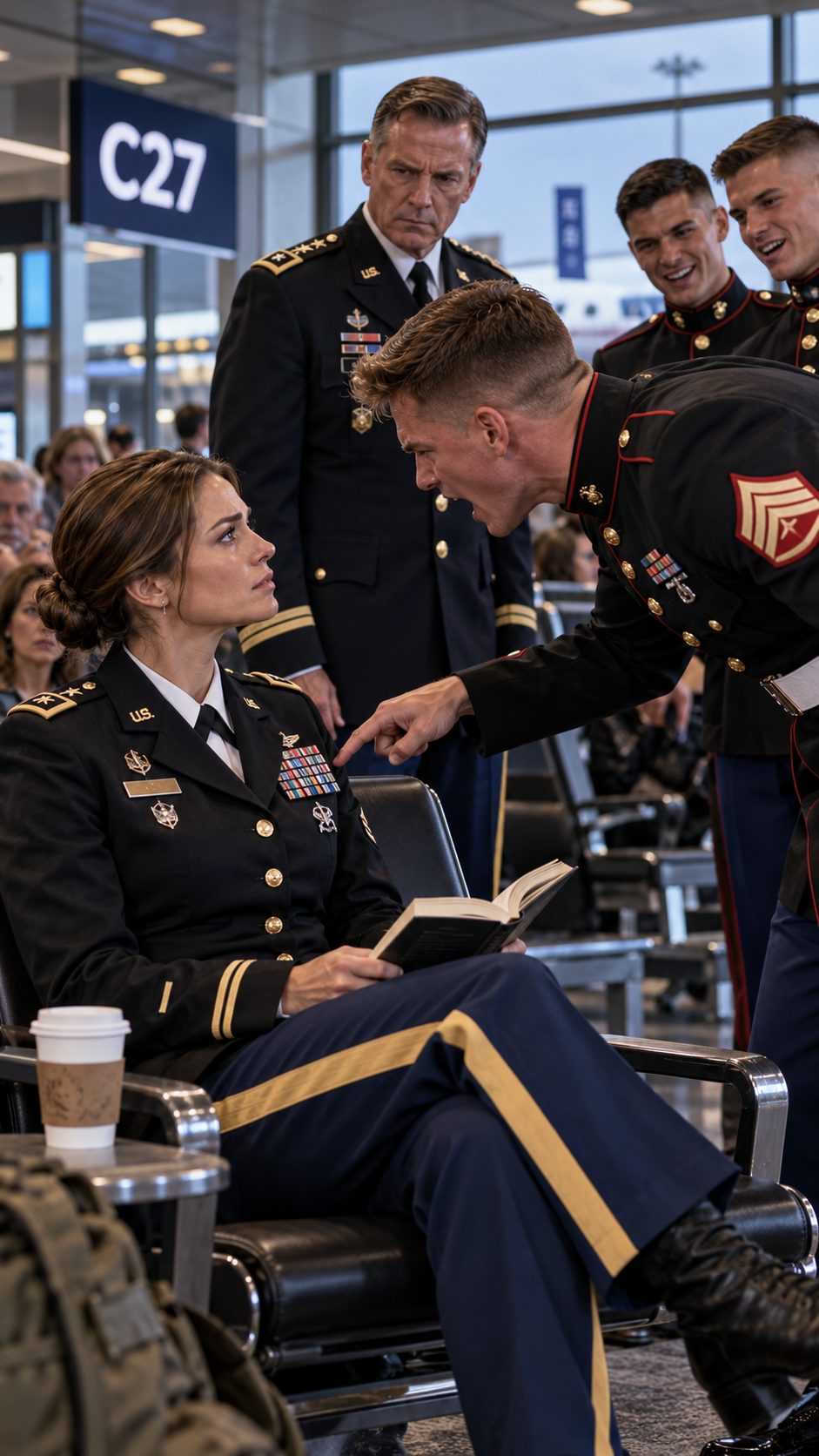
The law offices of Sterling, Vance & Croft occupied the fourteenth floor of a reflective-glass high-rise in Rosslyn, Virginia, overlooking the dark green canopy of Arlington National Cemetery across the Potomac.
The carpets were so thick they muffled the sound of my dress heels entirely.
The walls were lined with framed photographs of partner Richard Sterling shaking hands with senators, defense secretaries, and three-star generals at annual service balls.
It was 1600 hours on Tuesday.
Richard sat behind a massive desk of reclaimed black walnut, wearing a charcoal three-piece suit that cost more than my monthly base pay. He was thirty-eight, with the same sharp Sterling jawline as his uncle, but his smile was entirely political—smooth, frictionless, and calibrated for television cameras.
""Lauren,"" Richard said, rising with both hands outstretched as his secretary closed the heavy mahogany door behind me. ""You look fantastic. The army blues suit you. Much better than the old flight suits.""
I didn't take his hands.
I set my leather briefcase on the arm of the guest chair and remained standing.
""Skip the family reunion, Richard,"" I said. ""Uncle Thomas told me about the subpoena.""
Richard’s smile didn't break; it merely narrowed, taking on that slightly indulgent edge lawyers use when dealing with clients who don't understand civil procedure.
""Thomas shouldn't have involved himself,"" Richard said, stepping around the desk to pour two glasses of sparkling water from a silver carafe. ""He’s four stars, but he’s retiring in June. He still thinks the Department of Defense is run like an infantry division in nineteen-ninety. It’s not. It’s run through legislative compromise.""
""Is that what you call forging a Medal of Honor citation?"" I asked. ""A legislative compromise?""
Richard set the glasses down with a crisp, delicate *clink*.
""Gregory Cole died in uniform, Lauren,"" Richard said, his voice dropping into that smooth, reasonable cadence he used for congressional hearings. ""He gave his life in an combat zone. Whether he died thirty seconds before or thirty seconds after a radio malfunction doesn't change the outcome: his company held that perimeter.""
""He didn't have a radio malfunction, Richard,"" I countered, looking him dead in the eye. ""He gave an illegal fire direction to drop high explosives on his own wounded men. If I hadn't torn the battery cables out of the transmitter, thirty-eight young Marines would have been buried in that valley by their own artillery.""
Richard let out a soft, dismissive sigh, walking back behind his desk.
""You don't have the radio logs, Lauren.""
The words were spoken casually, but they dropped into the room like an iron bar.
""The division communications shelter took a direct hit from an insurgent mortar thirty minutes after you cleared the bunker,"" Richard continued, picking up a pen and tapping it against his blotter. ""The primary cryptographic hard drives were burned to ash. The physical notebooks were never recovered. The only surviving record of that afternoon is the sworn debrief provided by Major Cole’s executive officer—who was knocked unconscious two minutes into the firefight.""
""And my sworn statement,"" I said.
""Your statement was classified under an emergency national security annex signed by the theater commander,"" Richard replied, smiling with the cold satisfaction of a man holding four aces. ""An annex that cannot be entered into the public congressional record without unanimous concurrence from the joint chiefs. Which Admiral Cole will obviously never provide.""
I looked at my cousin.
We had spent summers together at our grandfather's farm in Georgia. We had learned to shoot twenty-twos behind the hay barn, caught catfish in the pond, and promised each other that we would wear the uniform until they made us take it off.
Now, he was sitting in a high-rise office in Arlington, wearing a four-thousand-dollar suit, using the corpses of twenty-year-old soldiers to purchase a seat at the defense lobby table.
""Admiral Cole offered you a senior partnership in his commercial consulting group after he retires from the Joint Chiefs, didn't he?"" I asked softly.
Richard didn't deny it. He didn't even blink.
""The defense budget for the next fiscal year is eight hundred and fifty billion dollars, Lauren,"" Richard said. ""The modernization contracts for the Pacific theater are being drafted in this building right now. Cole’s confirmation guarantees stability for thirty thousand troops and twenty major defense programs.""
He leaned forward, resting both forearms on the desk.
""All you have to do on Friday morning is sit before the subcommittee and confirm that Major Cole was actively coordinating the defense of the forward operating base when you last saw him alive.""
""That would be perjury.""
""That would be an interpretation of a chaotic combat environment,"" Richard corrected smoothly. ""You were under fire. You were concussed. You saw an officer moving toward the sound of contact.""
He reached into his desk drawer and pulled out a blue-bound folder, sliding it toward me.
""Sign the preliminary witness summary, Lauren. The committee accepts it into the record, the hearing is adjourned in fifteen minutes, and your name stays at the top of the promotion list for full colonel. You get your brigade command in Germany. Everyone moves forward.""
""And if I refuse?""
Richard’s expression finally hardened. The warmth vanished entirely, leaving behind the predatory, ruthless attorney who had destroyed dozens of military whistleblowers in closed administrative hearings.
""If you refuse,"" Richard said, ""my team will introduce your medical records from Landstuhl into the public hearing. The blast exposure evaluation that noted severe auditory trauma and acute stress response.""
My breath caught.
""We will argue that your recollection of Cole’s final radio transmission was an auditory hallucination caused by the initial IED blast,"" Richard said, his voice cold as river ice. ""We will call three clinical psychologists to testify that your refusal to relay the coordinates was a symptom of acute cognitive panic—that you abandoned your post and left Major Cole to die alone at the north gate.""
He stood up, looking down at me from across the wide mahogany desk.
""You won't get your eagle, Lauren. You will be medically retired as a lieutenant colonel under a cloud of administrative misconduct, and every veteran group in this country will remember you as the woman who tried to smear a fallen Marine hero to cover her own breakdown.""
The room was silent.
Through the plate-glass window behind him, the white marble headstones of Arlington stretched out in perfect, endless rows beneath the gray November sky.
I picked up my briefcase from the chair.
I didn't touch the blue folder.
""You're a brilliant lawyer, Richard,"" I said quietly, turning toward the mahogany door.
""Thank you, Lauren,"" he replied, thinking he had won.
I paused with my hand on the brass latch, looking back at him over my shoulder.
""You're just a terrible intelligence officer,"" I said.
---
Related Stories