Chapter 5: The Red Ribbon
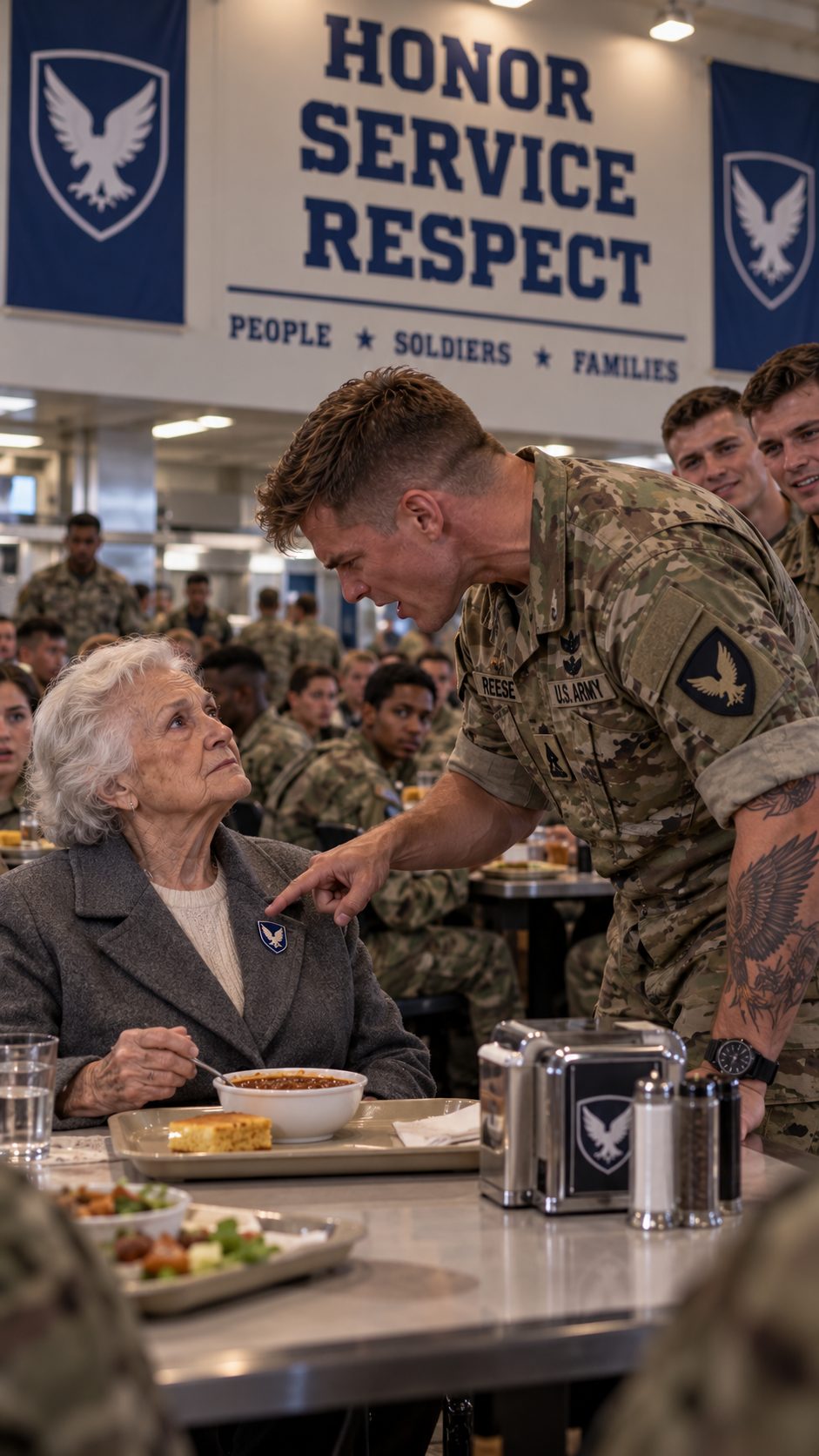
The temperature in the colonel's office seemed to drop ten degrees the moment Nathan Vance closed the door behind him.
The two military police officers remained outside in the hallway, their boots shifting softly on the runner, but Vance’s presence filled the room like a cold draft through a broken window pane.
He was fifty-six years old, built like a lightweight boxer, with iron-gray hair cropped close to his skull and the distinctive, aristocratic jawline of the Vance family. He had that smooth, effortless polish that only three generations of West Point graduates ever truly master.
""General Vance,"" Jimmy said, coming to attention behind his desk, his voice completely flat.
""At ease, Colonel,"" Vance murmured, not taking his eyes off the green ammunition can resting on the credenza.
He walked slowly across the Persian rug, his polished low-quarters clicking rhythmically against the exposed floorboards near the baseboard. He stopped three feet from the can, his gaze drifting down to the black oilcloth notebook lying open on the small table.
""The old orderly room,"" Vance said softly. ""The engineers called my chief of staff twenty minutes after they found the floorboard cavity. They thought it was unexploded ordnance.""
""It is unexploded ordnance, General,"" I said, stepping between him and the table.
Vance finally looked down at me.
His eyes were entirely devoid of the sneering arrogance that young Reese had shown in the dining hall.
There was no bluster in Nathan Vance.
There was only the quiet, terrifying competence of an officer who had spent thirty years managing budgets, reputations, and the delicate political machinery of the Pentagon.
""Captain Braddock,"" Vance said, his voice remarkably gentle. ""My father spoke of you often before he died. He said you were the finest field nurse the 101st ever had. He said you saved thirty-seven men at LZ Jamie with nothing but a pair of forceps and a field flashlight.""
""Your father was a thief, Nathan,"" I said, my voice steady as an iron post. ""And he left those thirty-seven men to bleed on dirty canvas while he moved whole blood out the back gate of Tan Son Nhut.""
Jimmy took a half-step forward, his jaw locked, but Vance didn't flinch.
He didn't raise his voice.
He simply reached into his service tunic, pulled out a slender silver pen, and tapped it against the edge of the mahogany desk.
""In nineteen-ninety-one,"" Vance said, looking directly at Jimmy, ""I sat in an officers' club in Germany and listened to your father tell me that my family name was built on stolen morphine.""
""And you threatened to end his son's career if he opened his mouth,"" Jimmy countered, his knuckles white against the desk.
""I did,"" Vance admitted without a trace of hesitation.
Jimmy blinked, stunned by the sheer, naked honesty of the confession.
""I had just pinned on major,"" Vance continued, his voice dropping into that quiet, gravelly register that commanded division headquarters. ""I believed my father was a saint. I believed the Vance name was spotless. I thought Thomas Mercer was an old, bitter infantryman whose brain had been scrambled by an artillery blast and twenty years of cheap bourbon.""
He walked to the window, looking out over the snow-covered parade field toward the memorial monument that stood in the center of the grass.
""And then?"" I asked, watching the set of his shoulders.
Vance turned back.
He reached into his breast pocket again.
This time, he didn't pull out a pen.
He pulled out a folded, certified document bearing the blue embossed seal of the Department of the Army Inspector General, dated three days ago.
""In twenty-twenty-two, when my nomination for the third star was submitted to the Senate committee,"" Vance said, ""the automated background scrub pulled forty years of digitized banking archives from the Union Bank of Switzerland. An account opened in nineteen-sixty-nine by Brigadier General Arthur Vance. Balance: one million, two hundred thousand dollars.""
Jimmy and I stood frozen.
""You knew?"" Jimmy rasped.
""I’ve known for four years,"" Vance said softly.
He walked to the small table, picked up the pink carbon receipt from the black notebook, and held it under the desk lamp.
His hand was trembling—just a tiny, almost imperceptible tremor that no sergeant or lieutenant would ever have been allowed to see.
""My father didn't just steal surgical supplies, Jimmy,"" Vance whispered, the smooth, political mask finally cracking to reveal a man carrying a crushing, suffocating shame. ""He used that money to buy his way onto the board of trustees at West Point. He used it to fund my sister's medical school. He used it to buy the house in Alexandria where my mother died.""
Vance set the paper down and looked Jimmy straight in the eye.
""You think you’re going to walk into that conference room and destroy my career, Colonel Mercer?"" Vance asked.
""I was prepared to,"" Jimmy said.
""You don't need to,"" Vance replied.
He tossed the Inspector General’s document onto the desk.
Jimmy leaned forward, his eyes scanning the bold black lettering at the top of the first page:
*SUBJECT: VOLUNTARY REQUEST FOR PERMANENT RETIREMENT AT CURRENT GRADE AND FORFEITURE OF FLAG-OFFICER SELECTION.*
*FROM: MAJOR GENERAL NATHAN VANCE.*
*TO: THE SECRETARY OF DEFENSE.*
""I signed it at zero-six-hundred this morning,"" Vance said, his voice flat as an empty cartridge case. ""Before I drove down from Fort Knox. The confirmation hearing tomorrow isn't going to happen. My retirement request includes a full disclosure of the Swiss accounts and an agreement to surrender the entire estate to the Army Medical Heritage Foundation to fund surgical research for combat amputees.""
Jimmy stared at the document, his breath catching in his throat.
The vengeance that had burned in his chest for thirty years—the righteous anger on behalf of his father—suddenly had nowhere to land.
The monster wasn't fighting back.
The monster had already put its own head on the block.
""Why didn't you do this four years ago?"" Jimmy asked, his voice shaking.
""Because my mother was still alive,"" Vance answered simply. ""She believed my father was a hero. She lived ninety-one years believing that the flag on our mantel was pure. I wasn't going to put her in a grave with the knowledge that her husband was a criminal. She passed away last Tuesday.""
Vance reached out, picked up his leather gloves, and pulled them back onto his fingers, smoothing the leather over his knuckles.
""The conference across the street isn't about my promotion, Colonel,"" Vance said, stepping toward the door. ""It’s a press briefing to announce my resignation from the service. You are welcome to bring that green ammo can into the room, Jimmy. You can hand those receipts to the reporters from the *Washington Post*. But you won't be breaking a general who is trying to hide. You'll just be kicking a corpse.""
He paused with his hand on the brass knob of the door, looking back over his shoulder at me.
""Captain Braddock,"" he said softly.
""Nathan,"" I replied.
""My father left one more thing in his personal safe,"" Vance said. ""A small jeweler's box with your name on the lid. He told me sixty years ago that he stole it from the division commander's desk the night before the airstrip fell, because he couldn't stand the thought of a woman getting it.""
Vance reached into his coat and set a small, worn blue velvet case on the corner of Jimmy’s desk.
He didn't wait for us to open it.
He pulled open the oak door, nodded once to the two military police officers waiting in the hall, and walked down the long corridor toward the snow, his back straight, his boots clicking in a slow, solitary cadence that faded into the winter quiet.
Jimmy stood motionless behind his desk.
After a long time, he reached out with a trembling hand and picked up the blue velvet case.
The brass hinge gave a tiny, dry screech as he flipped the lid open.
Resting on the aged white satin inside was a medal suspended from a pale blue ribbon dotted with thirteen white stars.
The Medal of Honor.
Attached to the pin was an original, typed citation from the Department of the Army, dated August 14, 1968, bearing the signature of the President of the United States:
*FOR CONSPICUOUS GALLANTRY AND INTREPIDITY AT THE RISK OF HER LIFE ABOVE AND BEYOND THE CALL OF DUTY: CAPTAIN QUINN BRADDOCK.*
Beneath the ribbon was a handwritten note on official Pentagon stationery, dated that morning:
*“The original citation was canceled fifty-six years ago by an administrative fraud. The President has signed the executive restoration order. You will receive it at the White House on Monday morning, ma'am. With the apologies of the United States Army.”*
Related Stories