Chapter 2: The Key Under the Azalea
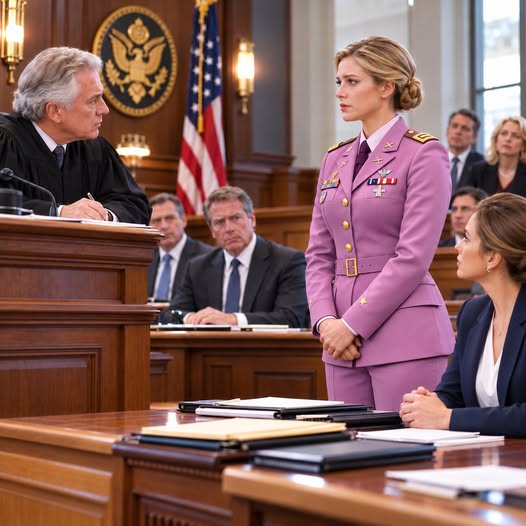
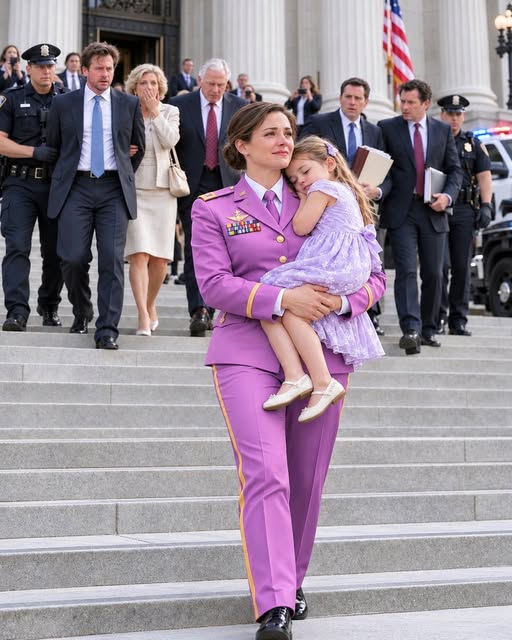
The heavy brass doors of the Greenville County Courthouse swung shut behind me, cutting off the echo of voices and the sterile chill of the marble rotunda.
Outside, the October air was warm and heavy with the scent of damp pine needles and impending rain.
Clare walked beside me down the wide granite steps, tucking her legal folder into her leather satchel. ""He has thirty days to file an appeal, Diana, but with Whitfield’s ruling dismissed with prejudice, no appellate judge in the state will touch it. The property transfer will clear the county auditor’s office by Friday.""
""Thank you, Clare,"" I said, my voice steady, though beneath my wool jacket, my pulse was still hammering at combat speed.
""Diana.""
The voice came from the foot of the steps, near the bronze war memorial.
My mother stood alone on the pavement. She had sent my father ahead to their rental car, an anonymous silver sedan idling near the parking meters. Her beige linen suit was immaculate, her hair styled in that severe, frozen suburban fashion she had maintained since I was a child.
She held her purse against her chest like body armor.
Clare glanced at me, taking half a step back. ""I'll be at my office if you need anything. Call me when you get to the house.""
""Thanks,"" I told her.
Clare nodded and headed toward the parking garage, her heels clicking crisply against the concrete.
I walked down the remaining four steps, stopping six feet from Susan Hayward.
Eleven years of uniform service teaches you how to read human posture before words are spoken—the tension in the shoulders, the weight shifted onto the back foot, the eyes darting to the flanks searching for an exit.
My mother was terrified.
""You look good in the uniform, Diana,"" she said softly, her lips trembling slightly before she managed to pull them into a fragile, practiced smile. ""Your father said your grandfather would have been proud. He was Navy, you know.""
""My grandfather died when I was four, Mom,"" I answered evenly. ""And Dad hasn't spoken to me since Christmas of 2019.""
Her smile faltered, crumbling around the edges. She looked down at her polished shoes, the autumn wind blowing a loose lock of graying hair across her forehead.
""Robert shouldn't have brought this to court,"" she murmured. ""I told him... I told him it was a mistake. Ruth loved you. Everyone knew she loved you.""
""Robert said something to you at the rail,"" I said, cutting straight through the small talk with the directness of an interrogator. ""He said, 'If you think I’m going down alone for what we did to Ruth's accounts twelve years ago, you're dead wrong.' What accounts, Mom?""
Susan flinched as if I’d thrown ice water into her face. Her eyes darted toward the idling silver sedan, where my father sat behind the wheel, tapping his fingers impatiently against the steering rim.
""Robert was angry,"" she whispered, her voice thinning out. ""He talks when he’s angry. You know how he is. He says things he doesn't mean.""
""Robert is a lot of things, but he isn't stupid,"" I said, stepping closer. ""Twelve years ago, I was twenty years old. I had just finished my first deployment to Kandahar. You and Dad called me from Phoenix to tell me that Grandma had decided to downsize her savings because the roof on Birwood Lane was leaking.""
Susan swallowed hard, her throat clicking audibly.
""I sent home twelve thousand dollars of hazardous duty pay,"" I continued, each syllable landing like a lead weight between us. ""Every single dollar I earned running route clearances outside Spin Boldak. I wired it directly to Dad’s account because he said Grandma’s bank branch in Greenville didn't handle international military transfers.""
Susan looked away, her face flushing a dark, mottled crimson.
""Did the roof cost twelve thousand dollars, Mom?""
""Diana, please,"" she begged, her voice cracking into a high, frightened whisper. ""You don't know what it was like back then. The housing market collapsed in Phoenix. Your father lost the commercial brokerage firm. We had Hailey’s tuition to pay, and the bank was threatening to foreclose on our house—""
""So you stole from your own mother,"" I said, the truth locking into place with sickening clarity. ""You and Robert.""
""We borrowed it!"" she cried out, her eyes flashing with a sudden, desperate defensiveness. ""Robert had an investment scheme in Charleston. A development parcel near the port! He swore on his life that it was going to quadruple in eighteen months! He said Mother would never even notice the certificates were leveraged because we’d put the money back before the bonds matured!""
""And what happened to the Charleston parcel?""
Susan let out a broken, ragged breath that sounded like dry leaves scraping over asphalt.
""There was no parcel,"" she whispered. ""Robert used the money to settle his private margin calls with a brokerage in Atlanta. By the time your father and I found out, the trust accounts were completely drained. Sixty-four thousand dollars. Gone.""
I stood frozen on the sidewalk.
Sixty-four thousand dollars.
In 2012, Grandma Ruth had stopped taking her annual summer trips to the Blue Ridge mountains. She had started buying store-brand canned vegetables and turned off the heat in the upstairs bedrooms during the winter, telling me she preferred sleeping under three heavy quilts because it reminded her of her childhood in the hills.
She hadn't been eccentric.
She had been broke. Broke because her two surviving children had gutted her life savings while she was raising their daughter.
""Why didn't she call the police?"" I asked, my voice barely a rasp against the wind. ""Why didn't she report both of you?""
Susan looked at me, tears finally spilling over her mascara, running down the dry crevices of her cheeks.
""Because of you, Diana,"" she wept softly. ""Ruth told Robert that if she filed a police report, your father would go to prison, and she refused to let her granddaughter carry the shame of a felon for a father while you were wearing the country's uniform overseas.""
My mother reached into her designer bag, pulled out a tissue, and dabbed at her eyes with trembling fingers.
""Your grandmother told Robert that she was wiping the ledger clean,"" Susan said. ""She told him that the house on Birwood Lane was her final fortress, and that she would die on that porch before she let either of us take one more brick from her.""
The horn of the silver sedan sounded—two short, sharp bursts. My father was leaning across the passenger seat, glaring through the glass, motioning for her to get in.
Susan backed away from me, her heels catching on the expansion joint of the sidewalk.
""Robert isn't going to let this go, Diana,"" she warned, her eyes wide with a terror that went far deeper than a lost court case. ""He owes money in Atlanta. Real money. Bad people. He didn't want the house to live in. He promised the deed to a private equity lender two months before your grandmother died.""
She turned and hurried toward the idling car.
I didn't move. I watched her climb into the passenger seat, watched the silver sedan pull away into the midday traffic, its brake lights flaring red at the corner before vanishing toward the interstate.
I stood alone outside the courthouse for five minutes, the noise of the city washing over me like static.
Then I walked to my rented crossover, climbed inside, and drove south toward Birwood Lane.
The old neighborhood hadn't changed. The live oaks arched over the asphalt, their Spanish moss swaying gently in the rising humidity. Number 412 sat at the end of the cul-de-sac, its wraparound porch painted that familiar sea-foam white, the dark green shutters standing firm against the brick.
I parked in the gravel driveway.
The silence here was absolute, broken only by the chirping of Carolina wrens in the magnolia tree.
I walked up the wooden porch steps. Every board gave off that familiar, reassuring creak I had known since I was nine years old. Beside the front door, the heavy terracotta flowerpot sat beneath the dying azalea bush.
I knelt down, tipped the pot back two inches, and reached underneath.
My fingers brushed against the cool, rectangular surface of an old magnetic key box.
I slid the lid open.
Inside was the brass front-door key, just as it had been for twenty-four years.
And wrapped around the brass key was a small, torn scrap of yellow legal paper, covered in Grandma Ruth’s sharp, unmistakable cursive.
I unfolded the paper beneath the porch light.
> *Diana,*
> *If you're reading this, Robert has already tried his tricks, and you've already put him in his place. Good girl.*
> *Don't look for the silver in the dining room sideboard. Look under the second tread of the stairs leading to the crawlspace.*
> *Robert thought he took everything twelve years ago. He forgot that your grandfather spent thirty years working for the federal reserve bank in Charlotte.*
> *Be careful with the blue envelope.*
---
Related Stories