Chapter 3: The Weight of the Dirt
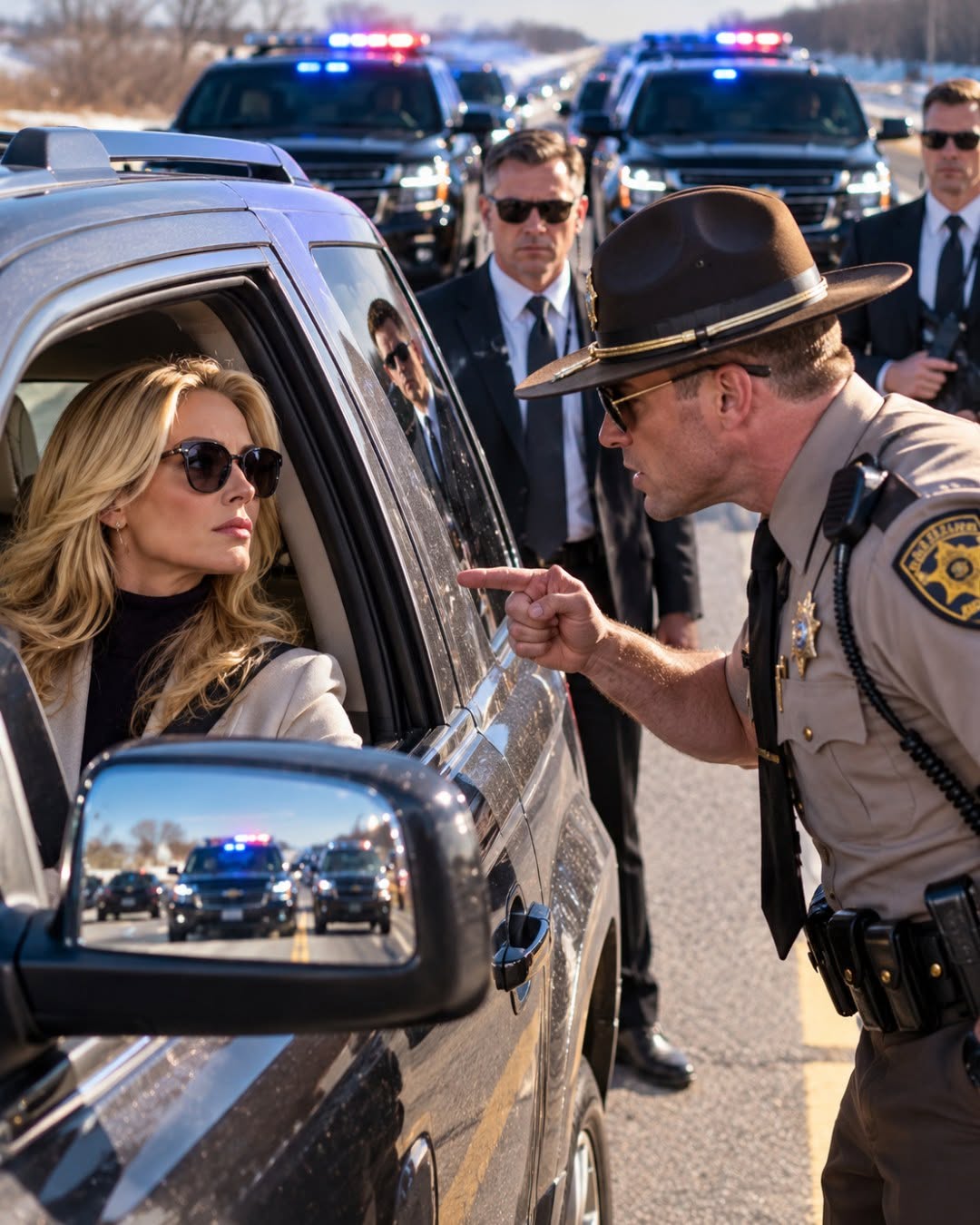
The three black Suburbans moved down Interstate 80 in a tight, synchronized wedge at eighty-five miles an hour, their low-profile LED warning lights pulsing in rapid strobes behind their dark front grilles.
Traffic parted before us like water before a bow. Semi-trucks edged onto the rumble strips, sedans backed off by two hundred yards, and the endless expanse of flat Nebraska corn stubble blurred past the reinforced ballistic glass.
Inside the rear cabin of the lead Suburban, the air smelled of ozone, clean leather, and secure satellite electronics.
I sat in the captain’s chair behind the communications console, my fingers flying across the ruggedized keyboard of the terminal.
Beside me, Hollis had his headset keyed to the Omaha field office.
""Director,"" Hollis said, sliding a digital folio onto my screen. ""Our intelligence analysts just finished pulling the corporate registry on the buyer listed in the county probate docket.""
I zoomed in on the document.
The entity attempting to purchase the six hundred and forty acres from Uncle Dale wasn't an agricultural cooperative. It wasn't a family farmer looking to expand his acreage.
It was *Platte Valley Industrial Logistics LLC*—a Delaware shell company incorporated forty-five days ago.
""Look at the beneficial ownership disclosure, ma'am,"" Hollis pointed to line fourteen.
My eyes scanned the filing.
The managing partners of the LLC were listed as Dale Thornton, holding thirty percent; and Marcus Sykes, holding seventy percent.
""Marcus Sykes,"" I said, the cold truth locking into place. ""Trooper Braden Sykes’s father. The chairman of the Buffalo County Board of Supervisors.""
""The state transportation department approved the preliminary environmental survey for the Kearney inland port expansion three weeks ago,"" Hollis reported, pulling up a municipal zoning map. ""The proposed rail spur cuts directly across the southern quadrant of your family’s farm. That dirt isn't worth three thousand dollars an acre for corn anymore, Director. The state appraisal for the rail corridor is thirty-eight thousand dollars an acre.""
A low, bitter breath escaped my lips.
Twenty-four million dollars.
Uncle Dale and Marcus Sykes had realized that if they could acquire the full six hundred and forty acres for the probate appraisal value of two million dollars, they could flip the southern parcel to the rail consortium for twenty-four million the following morning.
All they needed was to get rid of me.
Under Grandmother Evelyn's trust, if an heir failed to appear within sixty days of the formal probate citation, the remaining co-executor possessed the statutory authority to declare the asset abandoned and execute an emergency commercial liquidation sale to satisfy estate administration debts.
The debt they had manufactured was an unrecorded two-hundred-thousand-dollar promissory note Dale claimed my father owed him from 2018.
""My father never borrowed a dime from Dale,"" I said, my voice steady, though my knuckles turned white against the edge of the console. ""When my father was in hospice, Dale wouldn't even pay for his half of the heating oil.""
""We checked the bank records, Director,"" Hollis said quietly. ""The note is a complete forgery. Dale generated it three weeks ago using a digital scan of your father’s signature from an old irrigation easement.""
The Suburban took the Kearney exit at fifty miles an hour, the tires screaming against the asphalt before the heavy suspension absorbed the turn.
We tore through the commercial strip on Second Avenue, blowing through two yellow lights under federal emergency transit protocols, the sirens giving short, authoritative chirps to clear the intersections.
I looked at the digital clock on the dash: *3:18 P.M.*
Twelve minutes.
We crossed the railroad tracks, turned onto Central Avenue, and pulled up to the curb outside the Buffalo County Courthouse—a stately, three-story limestone building built in the 1920s, flanked by towering elm trees that were dropping golden leaves across the lawn.
The three black Suburbans stopped in an angled blockade across the judicial loading zone, their engines purring in unison.
People on the sidewalk stopped and stared. A county deputy standing near the metal detector at the front entrance dropped his coffee cup onto the concrete as eight armed federal agents in dark suits and body armor stepped onto the sidewalk in perfect, silent formation.
Hollis opened my door.
I didn't adjust my hair. I didn't change out of my faded denim jacket or my work boots.
I stepped onto the curb, took the sealed federal evidentiary binder from Hollis’s hands, and walked up the wide limestone steps with my badge clipped to the pocket of my shirt.
""Hollis,"" I said as we reached the double glass doors.
""Ma'am?""
""Leave four operators at the perimeter. The rest of you, follow me to Probate Courtroom B.""
""Understood, Director.""
We swept through the security checkpoint without breaking stride. The deputy at the magnetometer took one look at Hollis’s credential wallet, then at the gold shield on my chest, and pressed his back flat against the wall, his hands held high and clear of his belt.
We took the wide marble stairs to the second floor.
At the end of the corridor, sitting on a polished oak bench outside Courtroom B, was my cousin Haley.
She was twenty-nine, wearing an ivory wool coat that had cost at least two months of a state trooper’s salary, holding an iced latte in one manicured hand and scrolling through her phone with the other.
When the heavy sound of combat boots and dress shoes echoed down the hall, Haley looked up, her mouth open to offer a bored, municipal reprimand.
Then her eyes found mine.
The iced latte slipped from her fingers.
The plastic cup hit the marble floor, exploding in a brown spray of coffee and crushed ice that splashed across the toes of her brand-new designer boots.
Related Stories